
Hail Damage Roof Insurance Claims in Appleton, WI
Hail Damage Roof Insurance Claims in Appleton, WI
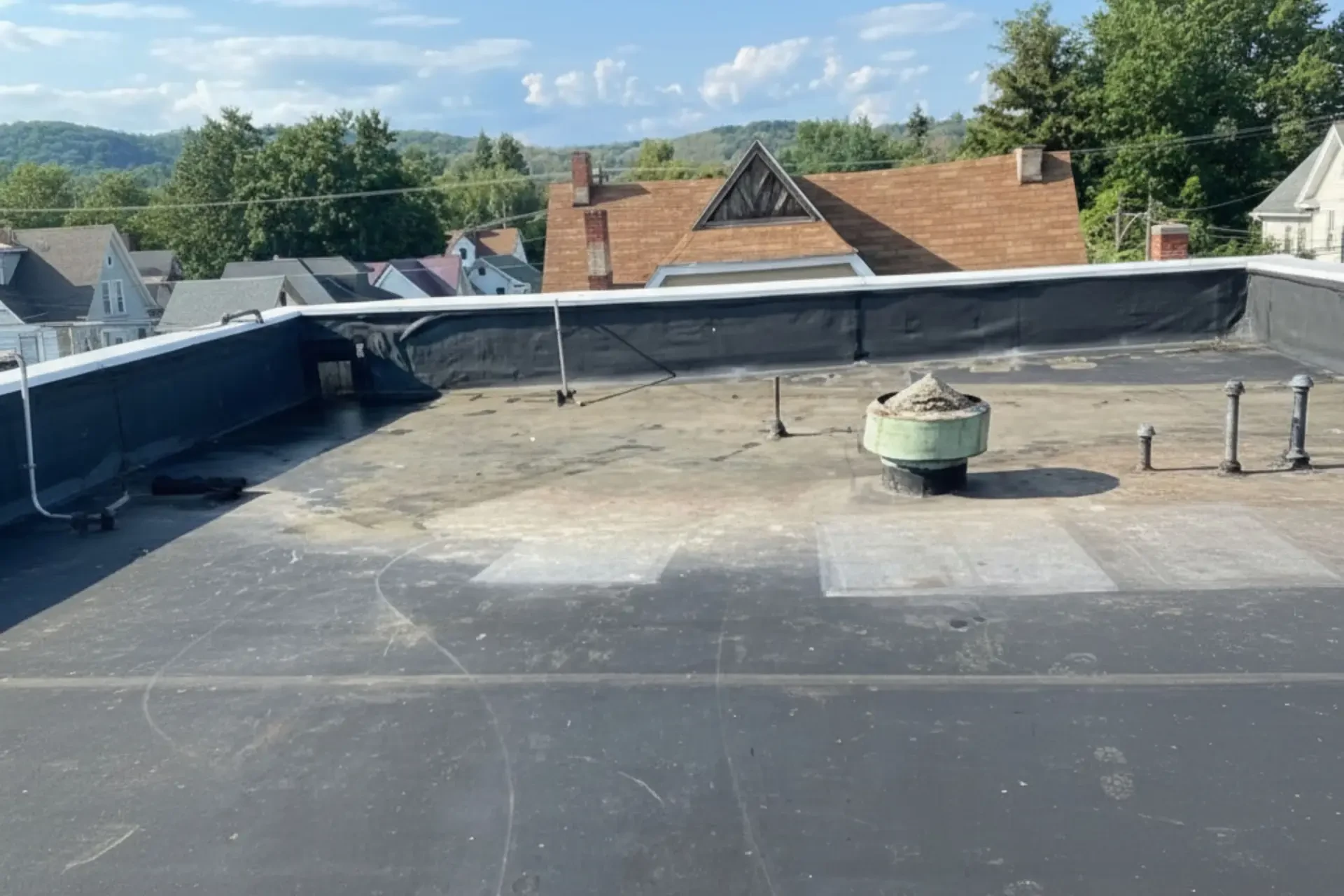
Northeast Wisconsin sees real hail seasons, usually building alongside the same summer storm systems that bring straight-line wind through the Fox Valley, and hail damage on a commercial roof is often harder to spot than wind damage because it rarely tears anything open on impact. A hail-bruised membrane or a dented metal panel can look fine from a distance and still represent real damage underneath. We document that kind of damage carefully as your roofing contractor, so a claim reflects what the hail actually did rather than what's visible at a glance.
How Hail Damages Low-Slope Membrane Roofs
Hail bruising on a single-ply membrane doesn't always puncture the surface right away, but it compresses the membrane against the insulation underneath in a way that can create a soft spot prone to failure months later. We check for that kind of impact with a hand test across the roof surface rather than a visual scan alone, since hail bruising is often more of a feel than a sight, particularly on white or reflective membrane where discoloration from the impact isn't as visible.
Hail Denting on Standing Seam and R-Panel Metal Roofs
Metal roofs common on manufacturing and warehouse buildings along the I-41 corridor show hail impact more visibly as denting across the panel field, and while cosmetic dents alone don't always compromise waterproofing, dents concentrated near seams or fastener points can loosen a panel's attachment over time. We inspect seam and fastener zones specifically after a hail event, beyond the open panel field, since that's where denting is more likely to affect performance rather than only appearance.
Why Hail Damage Is Easy to Miss From the Ground
A hail event that leaves obvious damage on cars and siding at ground level doesn't always translate to visible damage on a flat roof thirty feet up, which is part of why hail claims on commercial buildings often get underreported. We recommend a roof inspection after any significant regional hail event even without a visible interior leak, since catching bruising or denting early keeps a minor claim from becoming a larger repair once a soft spot eventually fails.
Documenting Hail Impact for a Claim
Hail documentation relies on test squares, a defined area of roof where impact marks are counted and measured, alongside photos and, where useful, a moisture scan to check whether any impact has already let water in. We use the same test-square approach adjusters typically expect, so the documentation translates directly into a claim conversation rather than requiring a second inspection to reconcile methods.
Test Squares and Adjuster Walkthroughs
When an adjuster wants to walk the roof directly, we mark out the same test squares used in our own documentation and review impact density with them on site, section by section. That shared reference point tends to move the claim conversation faster than two separate inspections working from different notes.
- Hand-test inspection for membrane bruising not visible by sight alone
- Seam and fastener zone inspection on standing seam and R-panel metal roofs
- Test-square impact counts documented per roof section
- Moisture scan where impact may have already allowed water intrusion
- Photo documentation dated to the reported hail event
- Joint test-square review with your adjuster when requested
Coatings, Skylights, and Other Hail-Vulnerable Details
Roofs with acrylic or silicone coatings can show hail impact differently than bare membrane, sometimes with visible cratering in the coating layer that doesn't necessarily mean the membrane underneath was breached. Skylights, roof hatches, and other penetrations are also more vulnerable to hail impact than flat membrane sections, and we check each of these separately as part of a full hail inspection rather than assuming a clean field membrane means the whole roof came through undamaged.
When Multiple Buildings in the Same Area Report Hail Damage
A single hail cell can track across several blocks of the Fox River Mall corridor or an industrial park along Highway 41 in a matter of minutes, damaging multiple commercial roofs along its path. We document each building on its own merits rather than assuming uniform damage across a portfolio, since hail intensity and roof material response can vary meaningfully even between adjacent properties hit by the same storm cell.
We're your roofing contractor, not a public adjuster , we inspect, document, and substantiate the roof damage so you and your adjuster work from an accurate, complete scope.
Related
Ready to review the roof scope?
Request a Roof AssessmentRelated
Ready to review the roof scope?
Request a Roof AssessmentDocumenting Hail by Material and Roof Area
Hail does not leave the same evidence on every component. We inspect membrane fields, coated metal, edge metal, flashings, rooftop equipment, skylights, and soft-metal indicators separately, then identify locations on a roof plan or photo sequence. Test cuts or destructive investigation are proposed only when they are needed and authorized. The resulting scope distinguishes isolated punctures, widespread surface damage, and unrelated aging so the building owner has an accurate repair picture. Emergency work, permanent repair, and recommended maintenance remain separate line items. We provide roofing documentation and construction scope; we do not promise coverage, direct settlement strategy, or act as a public adjuster.