
TPO 80 Mil Roofing in Appleton, WI
80-Mil TPO for High-Traffic Fox Valley Industrial Roofs
Eighty-mil TPO costs more per square foot than the standard 60-mil sheet, and on the wrong roof that extra cost buys nothing. On the right roof, usually one carrying real foot traffic or equipment load, the thicker gauge is the difference between a membrane that survives its warranty term and one that does not.
What the Extra Twenty Mils Actually Buys
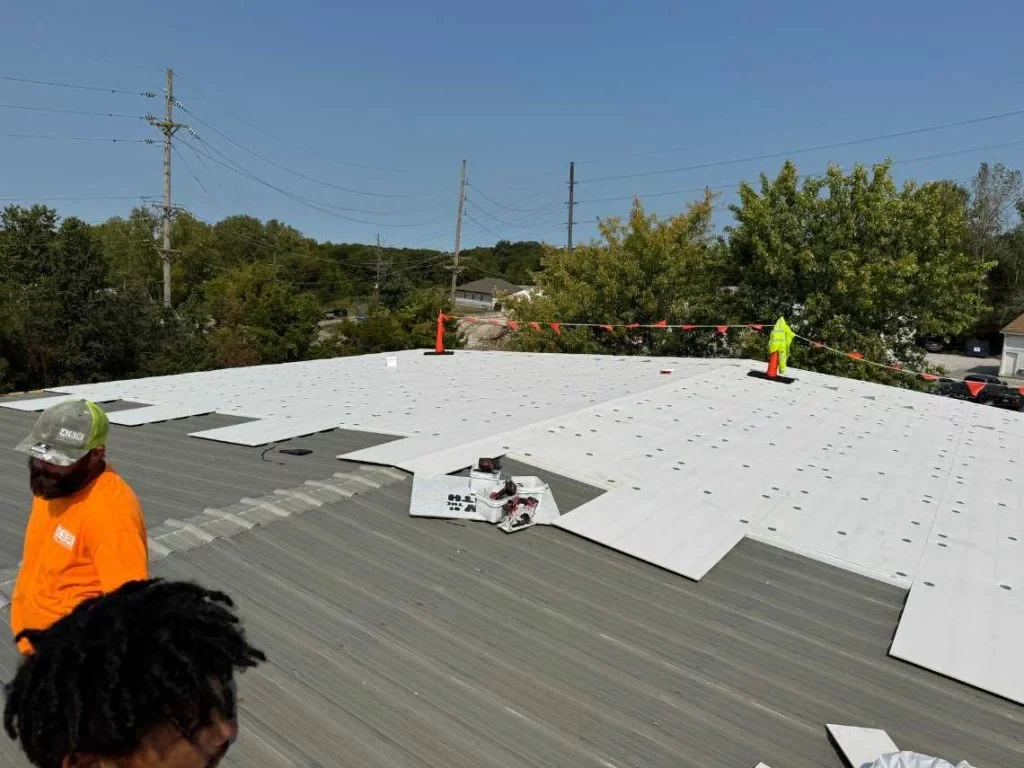
The added thickness sits mostly in the top ply, which is the layer that takes abrasion, foot traffic, and impact before the reinforcing scrim is exposed. On a roof serving Oshkosh Corp's specialty-vehicle plants or a manufacturing building in Kaukauna's industrial park, where technicians cross the membrane routinely for equipment service and material handling stages near rooftop curbs, that added wear layer is the whole argument for spending more per square foot.
It is not a blanket upgrade, though. A low-traffic office roof gains little from 80-mil beyond a marginally longer service life, and we say so plainly rather than upselling a gauge the building does not need.
Impact Resistance on Roofs With Real Equipment Loads
UL 2218 rates roof coverings on a Class 1 through Class 4 scale for resistance to steel-ball impact, and the cover board under the membrane usually matters as much as the gauge itself in that rating. Eighty-mil TPO over a high-density cover board performs meaningfully better against dropped tools, ladder feet, and wind-blown debris than the same gauge over a soft polyiso board alone.
We see this most on distribution and manufacturing roofs where the building itself creates the abuse: loading dock traffic below, rooftop crane staging, or seasonal equipment changeouts. The membrane needs to survive the building's own operations, not simply weather.
Fastening Schedule and Wind Uplift for Larger Roof Plates
Larger industrial roofs, the kind common around Kaukauna and Greenville's distribution park near Appleton International Airport, often carry bigger membrane sheets and wider field zones, which changes the fastening math. We calculate corner, perimeter, and field zones separately for each roof rather than reusing a fastening pattern from a smaller building, because a plate spacing that holds on a 20,000-square-foot roof will not necessarily hold on a 150,000-square-foot plate with a different roof geometry.
Mechanically attached 80-mil systems also tolerate a slightly wider fastener spacing than 60-mil in some manufacturer assemblies, since the thicker sheet distributes load across the plate differently. We confirm that against the specific manufacturer's published assembly rather than assuming it carries across brands.
Where 80-Mil Is the Right Call in the Fox Valley
- Manufacturing roofs with recurring technician or forklift traffic for equipment service
- Distribution and warehouse roofs near the airport corridor with dense rooftop unit counts
- Buildings with a documented hail or wind-debris loss history
- Roofs where the recover substrate is uneven and needs a thicker sheet to bridge minor irregularities
- Long-hold assets where ownership is pricing the roof over a longer capital cycle
Cold-Weather Welding on the Heavier Sheet
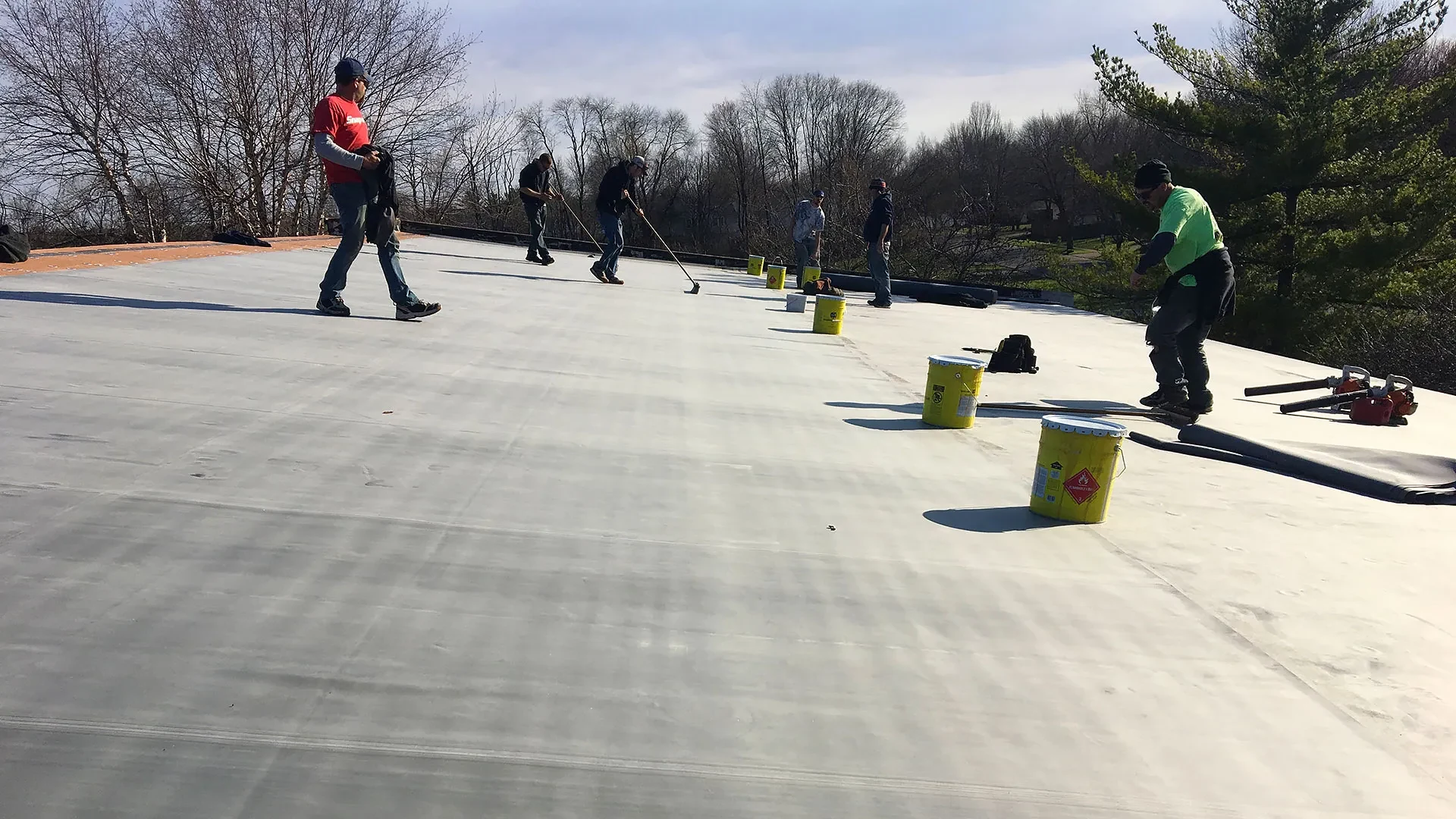
The thicker membrane takes more heat to bring the weld zone to temperature, which slows production rate on cold-weather installs compared to 60-mil. We build that into the schedule up front rather than discovering it mid-project, adjusting crew sequencing so seams get welded and probed before end-of-day temperature drop rather than rushed to beat the light.
Once welded, 80-mil seams hold up well through the Fox Valley's freeze-thaw swings for the same reason 60-mil does: the risk is concentrated in the install window, not in twenty years of service temperature cycling.
Lifecycle Cost Compared to 60-Mil
On material and labor alone, 80-mil prices above 60-mil by a real margin, and on a large industrial roof that gap is not small. The comparison that matters is cost per square foot over the expected service interval, factoring in the likelihood of a mid-life recover driven by traffic wear or impact damage rather than membrane age alone.
For a low-traffic office roof, 60-mil usually wins that math outright. For a manufacturing or distribution roof with real operational abuse, the lifecycle number often favors 80-mil even though the day-one price is higher. We run both before recommending either.
Questions Fox Valley Owners Ask About 80-Mil TPO
Does 80-mil TPO cost significantly more than 60-mil?
Yes, on a per-square-foot basis. Whether that premium is worth it depends on the roof's traffic pattern, equipment load, and expected hold period.
Is 80-mil TPO required for industrial roofs?
Not automatically. Plenty of light-industrial roofs with minimal traffic do fine on 60-mil. We base the recommendation on how the roof gets used, not the building classification alone.
Can 80-mil TPO go over an uneven existing roof in a recover?
It bridges minor substrate irregularities better than 60-mil, but a substrate with real structural unevenness still needs to be corrected before either gauge is installed.
How does 80-mil hold up to forklift and ladder traffic?
Better than 60-mil, particularly over a high-density cover board, but repeated point-load traffic still benefits from walk pads at known service paths regardless of gauge.
Does 80-mil TPO take longer to install than 60-mil?
Welding production rate runs slightly slower on the thicker sheet since it takes more heat to reach weld temperature, which we account for in the project schedule.
Related
Ready to review the roof scope?
Request a Roof AssessmentWhere the Heavier TPO Sheet Adds Value
An 80-mil TPO membrane is usually considered where traffic, service access, long-term ownership, or a demanding roof layout justifies additional sheet thickness. Thickness alone does not correct wet insulation, poor drainage, weak edge attachment, or incompatible flashings, so we resolve those conditions before treating the heavier membrane as an upgrade. The Appleton scope identifies high-traffic paths, mechanical zones, loading areas, drains, overflow routes, and transitions that need reinforced protection. It also separates standard field details from locations requiring custom fabrication or additional membrane layers. That distinction keeps the bid comparable and lets the owner see where the added material is doing useful work. Closeout photographs and an organized detail set then support future maintenance instead of leaving the facilities team with only a product name.