
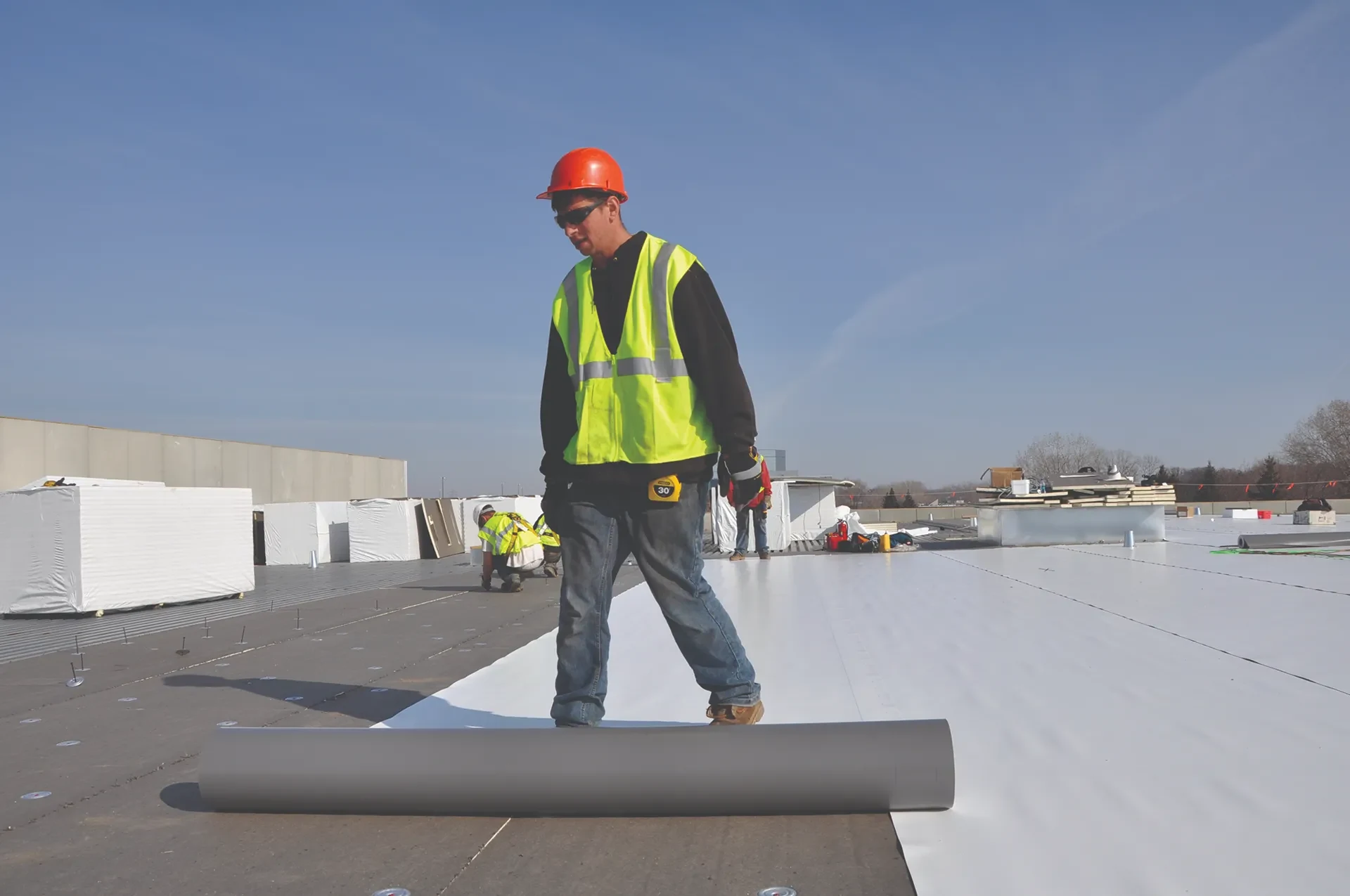
Metal R-Panel Roofing in Appleton, WI
Exposed-Fastener Panel Roofs for Rural Fox Valley Buildings
R-panel and PBR are what we install and repair most on the ag buildings, pole-frame structures, and light-industrial shops scattered through Seymour, Black Creek, Shiocton, and the townships around Freedom and Dale. It's a corrugated exposed-fastener panel, cheaper to install than standing seam, and it's the right call on a lot of rural commercial buildings where budget and function matter more than a concealed seam.
Exposed-Fastener Panel Systems for Rural Fox Valley Buildings
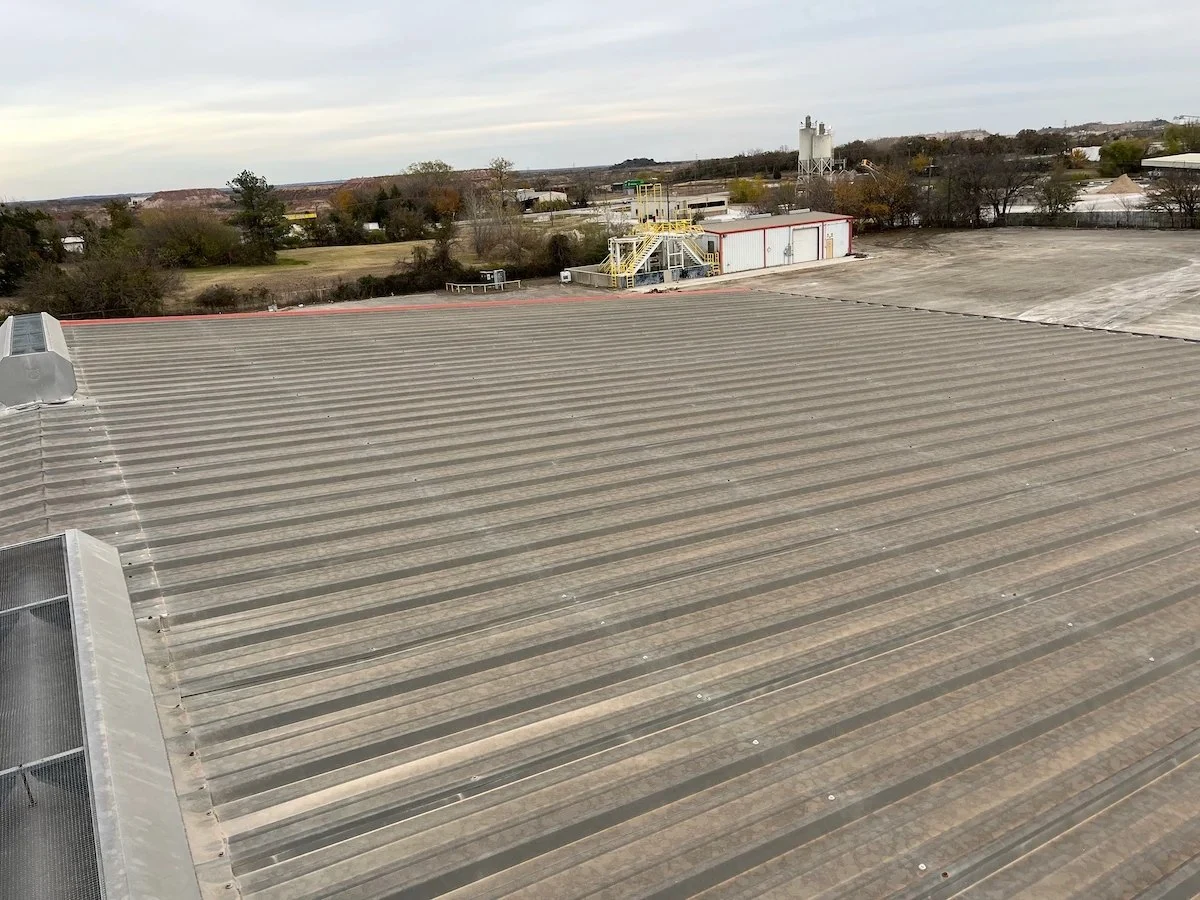
R-panel attaches directly through the panel face into purlins with gasketed screws, unlike standing seam's hidden clip attachment. That's a simpler, faster installation, and it's why R-panel remains the default on ag service buildings, storage structures, and small manufacturing shops around Hilbert and Sherwood where a lower-cost roof still needs to perform through the same winters as everything else in the region.
The tradeoff is that every one of those exposed fasteners is a potential leak point over time, in a way standing seam's concealed clips aren't. That's not a reason to avoid R-panel, it's just the maintenance reality that comes with the lower installed cost, and it's why fastener condition is the first thing we check on every R-panel inspection.
Purlin Spacing and Panel Gauge for Ag and Light-Industrial Buildings
Panel gauge and purlin spacing have to match on an R-panel roof, and a lot of the older ag buildings we look at in Omro and Winneconne were built with purlin spacing sized for a lighter panel than what's currently installed, or vice versa after a prior repair. We check span tables against actual purlin spacing before quoting a full recover, since undersized purlins under a heavier panel spec is a structural problem, not a cosmetic one.
Snow load matters here too, particularly on buildings with a shallower roof pitch where accumulated snow sits longer before sliding off. We size panel gauge and fastener spacing to the actual load the structure sees, not a generic minimum spec.
Fastener Backout and Gasket Failure: What We Check at Inspection
Exposed fasteners work loose over years of thermal cycling, and the neoprene gasket under each screw head degrades with UV exposure well before the metal panel itself shows wear. A roof that looks fine from the ground can have dozens of backed-out or failed-gasket fasteners causing slow leaks that only show up as a stain on the ceiling below.
- Fastener backout and stripped purlin threads
- Gasket cracking and UV degradation at screw heads
- Panel-to-panel lap seal condition along overlapping ribs
- Rust staining and streaking at fastener rows
- Ridge cap and eave trim fastening and sealant condition
- Sidewall and endwall flashing at building corners
We re-torque or replace fasteners in batches rather than one at a time when a roof shows widespread backout, since a roof with dozens of failing fasteners is more efficiently addressed as a full re-fastening pass than chasing individual leak calls over several seasons.
Recover and Retrofit Options Over Existing R-Panel
A retrofit system with new purlins or hat channel installed over an existing R-panel roof lets us add a standing seam or a fresh R-panel layer without tearing the old roof off, which keeps a working shop or ag building dry and operating through the project. This works well when the existing structure is sound but the panel itself has reached the end of its service life from fastener fatigue.
Where the existing roof has widespread rust-through rather than just fastener problems, retrofit over it doesn't make sense structurally, and we recommend full tear-off instead.
Condensation and Ventilation Behind R-Panel Roofs
Unconditioned ag and storage buildings without a vapor barrier or adequate ridge and eave ventilation get condensation dripping off the underside of the panel, which owners sometimes mistake for a roof leak. We check ventilation and vapor barrier condition as part of any R-panel inspection, since adding insulation without addressing ventilation can make a condensation problem worse rather than better.
Ridge vents and continuous soffit or eave intake work together to move that moist air out before it condenses on the panel underside, and on a lot of the older buildings we inspect around Freedom and Dale, one or the other was left out entirely at construction. Adding proper intake and exhaust ventilation is often a cheaper fix than owners expect, and it stops the problem at the source instead of just chasing individual drip locations across the ceiling below.
Matching Panel Profile on Repairs and Additions
Ag buildings and light-industrial shops get added onto over the years more than most commercial structures, and matching an existing R-panel profile on an addition or a partial re-roof isn't always straightforward. Panel rib spacing and coverage width vary by manufacturer, and a mismatched profile at a tie-in seam is one of the more common leak points we get called out to fix on buildings that have been expanded piecemeal over a decade or two around Hilbert and Shiocton.
We keep a working knowledge of the panel profiles common to this region's ag and pole-barn construction so we can source a compatible match rather than defaulting to a full re-roof just because an addition needs to tie into an older panel run.
R-Panel Roofing Questions From Rural Fox Valley Owners
How is R-panel different from standing seam?
R-panel uses exposed fasteners through the panel face into purlins, while standing seam attaches through concealed clips under the seam. R-panel costs less to install but needs more regular fastener maintenance over its service life.
Can you fix fastener backout without replacing the whole roof?
Yes, re-fastening with slightly larger screws and fresh gaskets addresses most backout issues, and we typically do this as a full-roof pass rather than spot-repairing individual fasteners.
What's causing the dripping under our pole barn roof that isn't rain?
That's usually condensation forming on the panel underside from warm moist air meeting a cold metal surface, which points to a ventilation or vapor barrier gap rather than an actual roof leak.
Is a retrofit standing seam over R-panel a good option for us?
It can be, if the structure and purlins are sound and you want to move to a concealed-fastener system without a full tear-off. We evaluate the existing framing before recommending it.
How often should an R-panel roof be inspected?
Annually at minimum, with a closer look after any severe wind or hail event, since fastener and gasket problems tend to accumulate gradually and are cheaper to catch early than after a leak has already damaged the interior.