

Roofing Subcontractor for General Contractors in Appleton, WI
Roofing Subcontract Work for Fox Valley General Contractors
General contractors building new shells and running tenant improvement work around Greenville, Grand Chute, and Harrison need a roofing sub who bids to the drawn spec, holds a schedule against the rest of the trade stack, and doesn't hand back a closeout package that's missing half of what the owner needs. That's the standard we bid to on every job, not simply the ones with an owner's rep watching closely.
Bidding to the Drawn Spec, Not a Cheaper Substitute
Wisconsin's commercial energy code sets a minimum insulation R-value for low-slope roof assemblies, and an architect's spec usually builds in some margin above that minimum depending on the building's use. When we bid a package, we bid to what's drawn. If we think a substitution makes sense on cost or lead time, we flag it as an alternate in writing rather than quietly value-engineering the insulation package down and hoping the inspector doesn't catch the difference at close-in.
Change orders on a roofing package are expensive to unwind once the deck is covered and the next trade has already started work on top of it. We'd rather lose a bid on price than win one by cutting the R-value or fastening pattern the engineer specified and creating a change-order fight three weeks into the job.
Sequencing Rooftop Trades Without Blocking the Schedule
New construction and TI jobs stack a lot of rooftop work into a short window: mechanical curbs, electrical conduit runs, sometimes a future solar conduit path the owner wants roughed in now. We coordinate curb placement and penetration locations with the mechanical and electrical subs before membrane goes down, because moving a curb after the roof is dried in costs everyone time. On a tight GC schedule, that coordination call happens in the pre-construction meeting, not after the deck is already covered.
We also flag deck condition issues early. A wet or damaged deck section found after insulation is already installed pushes the whole schedule back a week while it gets replaced. We walk the deck with the GC's super before we start laying insulation specifically to avoid that.
Working the Fox Valley's Growth Corridors
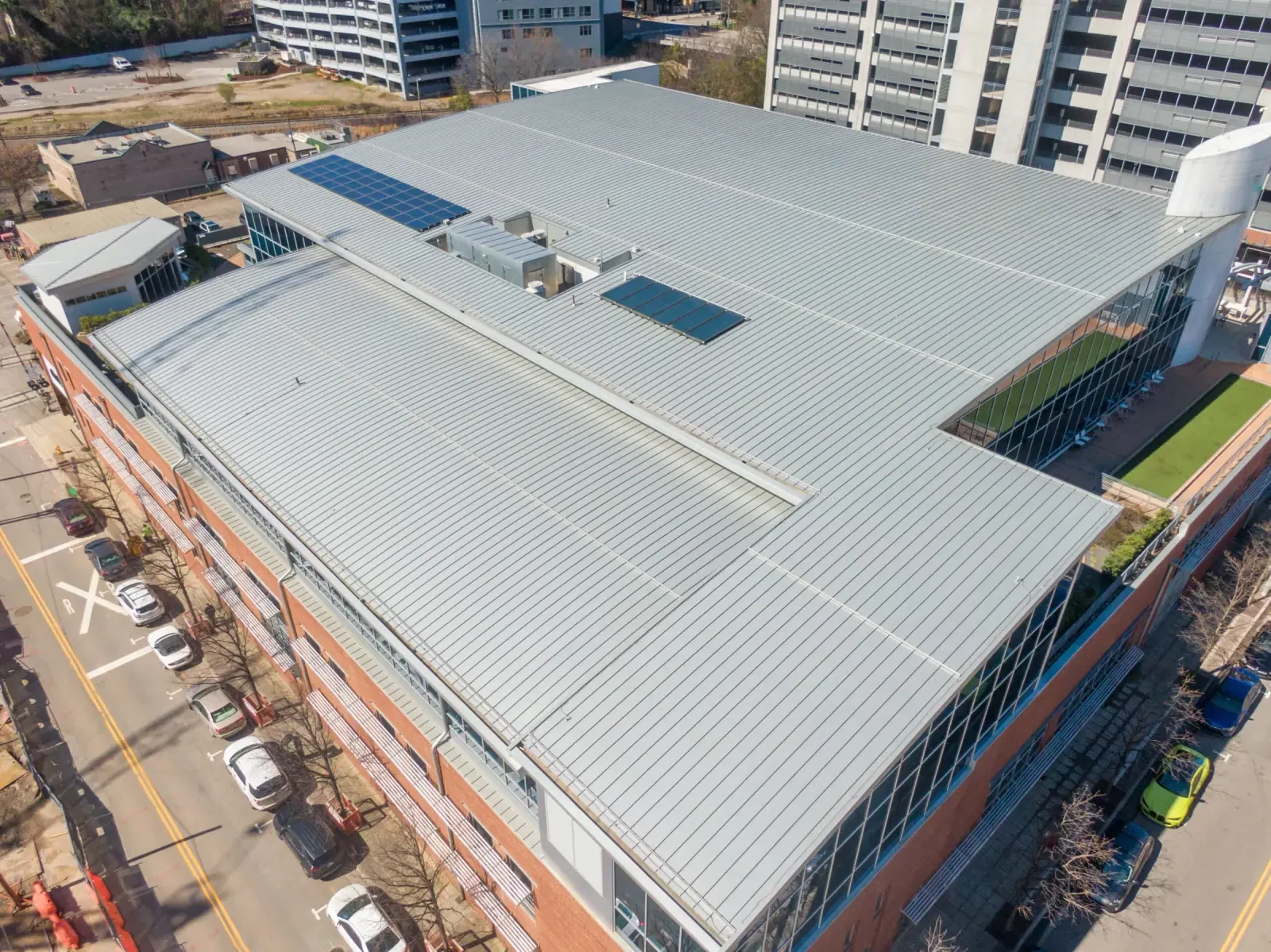
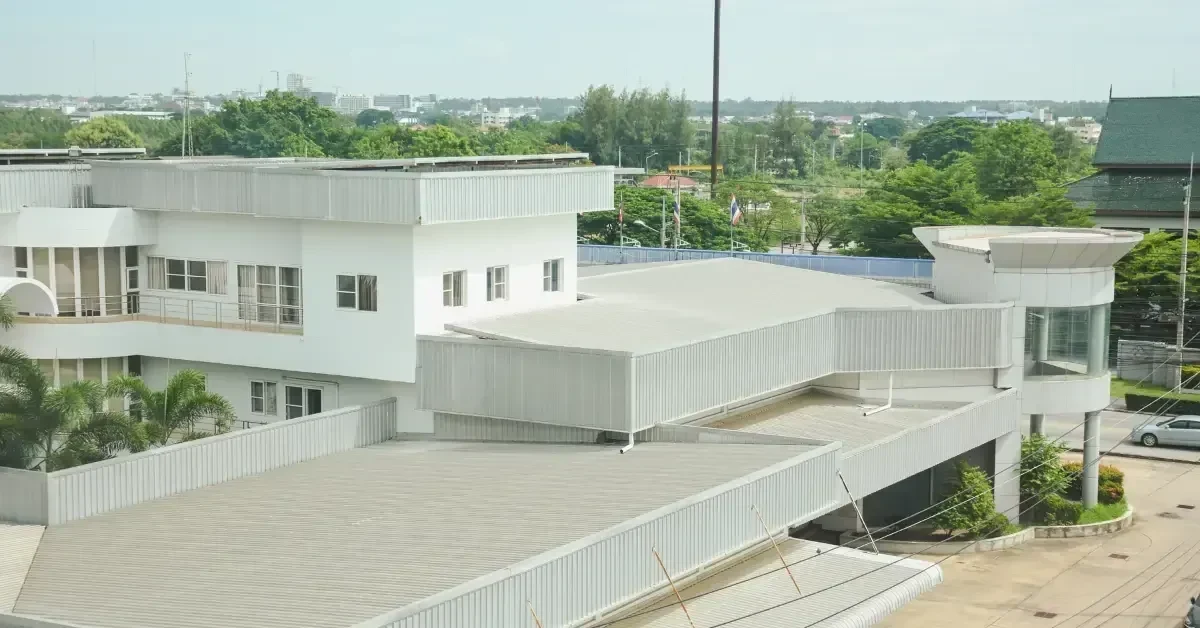
Most of the new commercial shell work we see right now is clustered around a handful of areas: distribution and flex space near Greenville and Appleton International Airport, retail pad sites along the Grand Chute corridor near the mall, and new commercial development following residential growth out toward Harrison and Darboy. Each of those has a slightly different roof profile , pre-engineered metal buildings with standing seam or through-fastened panel roofs out by the airport, single-ply over steel deck on the retail pad sites, and a mix of both on the smaller flex buildings going up along the growth edges.
Knowing which system a given corridor tends to use is more than trivia. It affects how fast we can source material and how many crews we can put on a job without waiting on a specialty panel order from out of state.
Metal Versus Single-Ply on a New Shell
For a GC building a pre-engineered metal building, standing seam metal with concealed clips gives better long-term thermal movement performance than through-fastened panel and holds up to Wisconsin's freeze-thaw cycling with fewer fastener backouts over time. For a steel-deck shell going to single-ply, we look at the owner's long-term hold plan: a fully adhered TPO or PVC system costs more up front but performs better under wind uplift on a building that's going to sit through forty years of Fox Valley winters.
Closeout Documentation the Owner Actually Needs
A roofing closeout package that's missing warranty registration, as-built fastening pattern documentation, or manufacturer inspection sign-off comes back to the GC as a punch list item months after the job is done. We hand over a complete package at substantial completion: manufacturer warranty paperwork, as-built drawings noting any field changes from the approved shop drawings, and photo documentation of insulation and fastening before the membrane went down.
What We Need From the GC at Bid Time
- Current architectural roof plan and specification section, not a preliminary version
- Structural deck type and gauge, or PEB purlin spacing for metal buildings
- Mechanical and electrical rooftop equipment locations, even if not yet finalized
- Wind and snow load design criteria from the structural engineer
- Target dry-in date relative to the overall project schedule
- Warranty term the owner is requesting, since that affects system selection
What Fox Valley GCs Ask Before They Award a Roofing Package
Can you hold a dry-in date on a compressed schedule?
We tell you up front if a date isn't realistic instead of agreeing to it and missing it later. Weather is the biggest variable on Fox Valley schedules, especially on shells trying to dry in before the first hard freeze, so we build a few contingency days into any date we commit to.
Do you carry your own crews or sub out the install?
We run our own install crews on the systems we spec most often, which is part of how we hold a schedule commitment. That matters to a GC who's coordinating a dozen trades and can't afford a roofing sub who's also subcontracting labor on a tight timeline.
Will you flag a substitution instead of just making it?
Always in writing, before the material is ordered. If a specified product has a long lead time or a cost issue, we bring the alternate to you and the architect rather than making the call ourselves.
How do you handle deck deficiencies found after the job starts?
We document the condition with photos, notify the GC and owner immediately, and price the repair as a separate line item rather than absorbing it silently into the schedule and creating confusion about what caused a delay.
Can you work on an occupied phase while another phase is still under construction?
Yes, on phased TI and build-out projects we coordinate access and noise timing with whichever tenants are already occupying a finished phase, so the roofing work on the unfinished section doesn't become a tenant complaint for the GC.