
Roofing decisions with the whole building in view
Commercial Roofing of Appleton serves commercial property owners, managers, facilities teams, general contractors, institutions, and public agencies across Appleton, the Fox Cities, and surrounding northeast Wisconsin communities. We assess existing conditions, explain practical repair and replacement paths, and build scopes around the way the property must continue operating during roofing work.
A useful roofing proposal should make the important decisions visible: where water is entering, what moisture is trapped, whether the deck needs repair, how insulation and drainage should be handled, what penetrations and edge details require work, how occupants and equipment will be protected, and which maintenance or warranty requirements continue after closeout.
What We Document
Membrane
Seams, laps, flashings, repairs, wear, movement, punctures, and visible weathering are recorded before a recommendation is made.
Moisture
Leak history, staining, wet insulation indicators, ponding patterns, and likely entry paths are connected to the roof assembly.
Drainage
Drains, scuppers, gutters, slope, overflow routes, and low areas are reviewed as one water-management system.
Details
Edges, penetrations, curbs, parapets, transitions, expansion joints, and rooftop equipment are included in the scope.
Operations
Access, staging, traffic, occupied areas, deliveries, shutdowns, odor, noise, and daily dry-in requirements shape the work plan.
From Findings to a Defensible Scope
Repair, recover, coat, or replace
The recommended path is tied to existing conditions, compatibility, code, manufacturer requirements, service-life expectations, and budget.
Compare practical alternatives
Alternates make tear-off limits, deck repair allowances, insulation, drainage, edge metal, penetrations, and warranty requirements visible.
Phasing, protection, access, weather windows, and occupied-building constraints are planned before mobilization.
Build around the facility
Clear documentation gives ownership a practical basis for approving work now and planning future capital needs.
The result is a roofing plan connected to the building, the roof's actual condition, and the operating priorities below it.
designed for Occupied Properties
Commercial roofing without losing sight of the operation below
Appleton roofs sit over manufacturers, healthcare providers, schools, retailers, offices, warehouses, public facilities, and multifamily properties that often remain active during construction.
Daily plans account for safe access, pedestrian routes, equipment, interior protection, deliveries, debris, noise, odor, weather protection, and communication with the facility team.
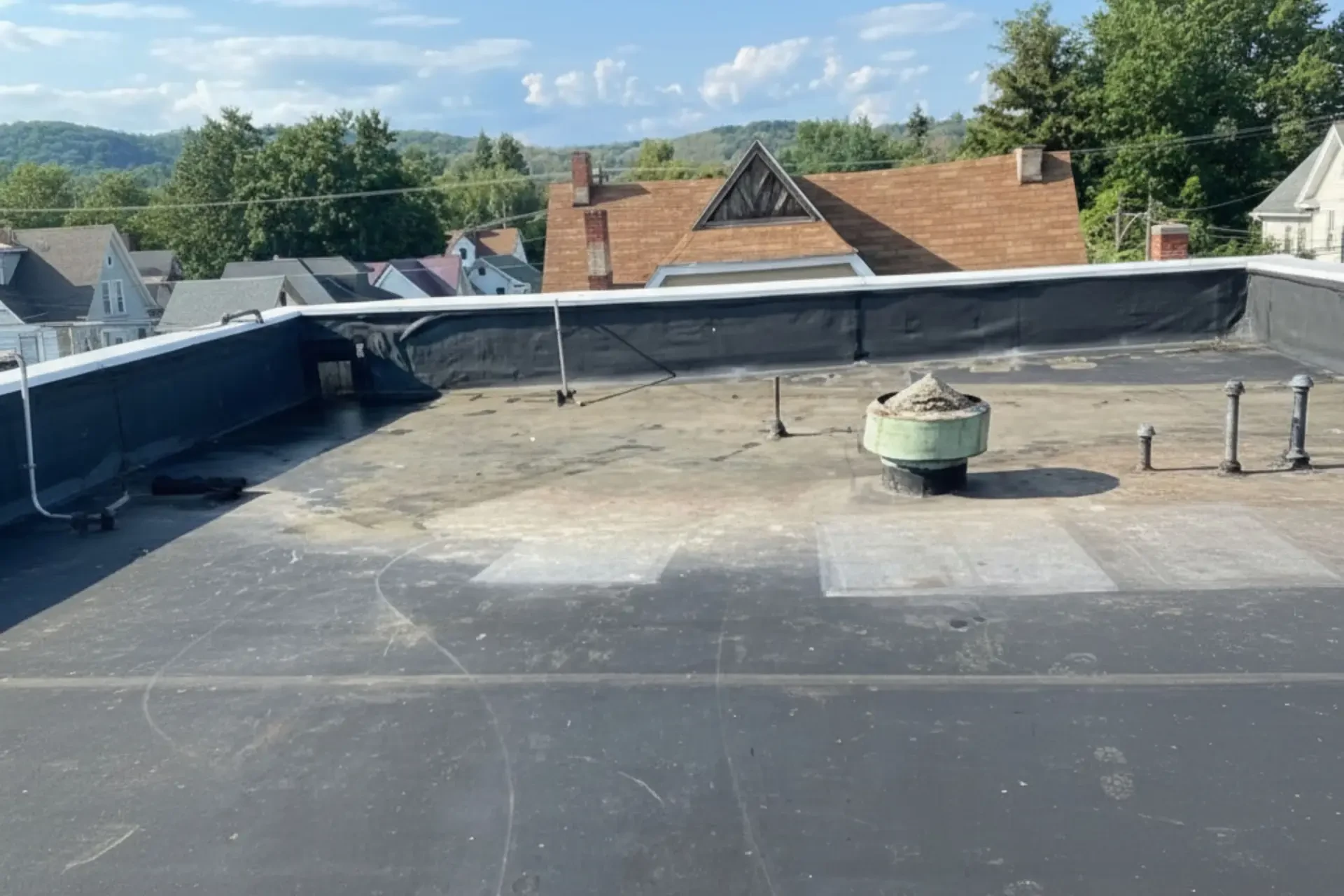
Roofing Services and Execution
Inspection and leak response
Condition documentation and focused troubleshooting identify the next practical action without losing the larger roof system.
Maintenance and repair
Seams, flashings, drains, penetrations, edge metal, traffic areas, and prior repairs are addressed in a coordinated scope.
Coatings and recover
Compatibility, moisture, adhesion, insulation, drainage, code, and warranty eligibility are reviewed before an overlay path is proposed.
Replacement
Tear-off, deck repair, insulation, slope, membrane, flashings, penetrations, edges, equipment, phasing, and closeout are treated as one assembly.
Closeout That Remains Useful
Condition Record
Before-and-after photos and inspection notes document what was found and what was completed.
Approved Details
System transitions, penetrations, edges, drainage, and repair details remain available for future reference.
Warranty Records
Manufacturer and contractor requirements are organized with the project documentation.
Maintenance Priorities
Routine inspections, housekeeping, drainage checks, traffic controls, and follow-up repairs are made clear.
Capital Planning
Deferred areas and future work are identified so the next budget cycle starts with facts.
Facility Handoff
The roof record is prepared for the owners and facilities teams who will use it after demobilization.