
White EPDM Roofing in Appleton, WI
White EPDM for Schools and Institutional Roofs Around Appleton
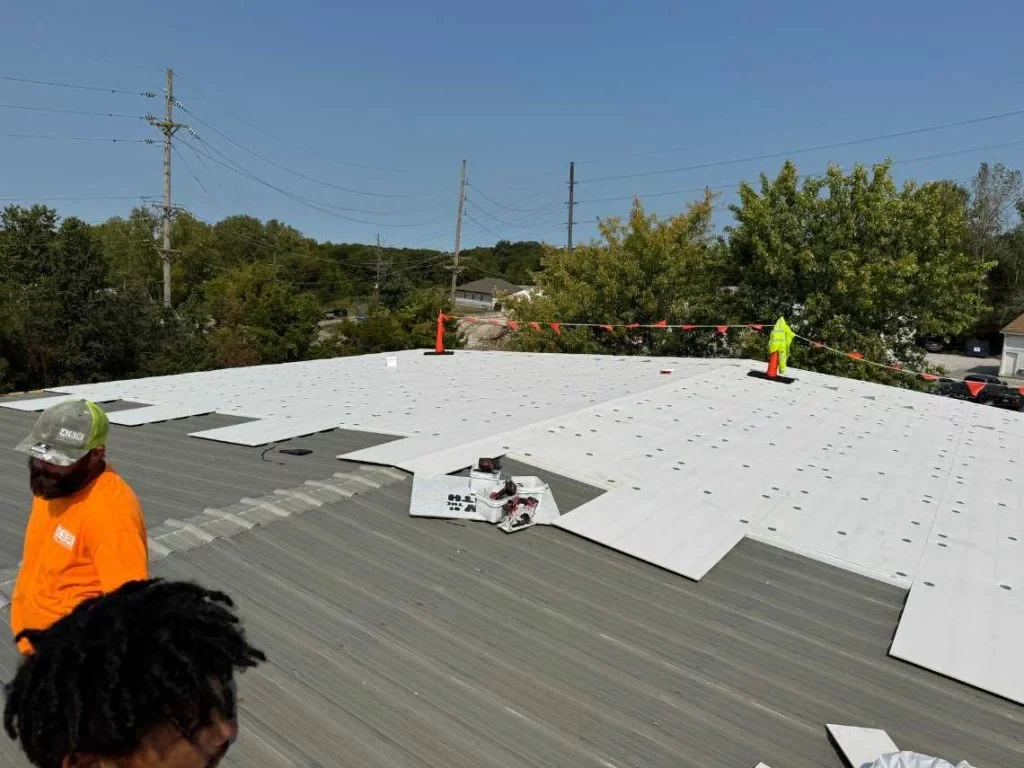
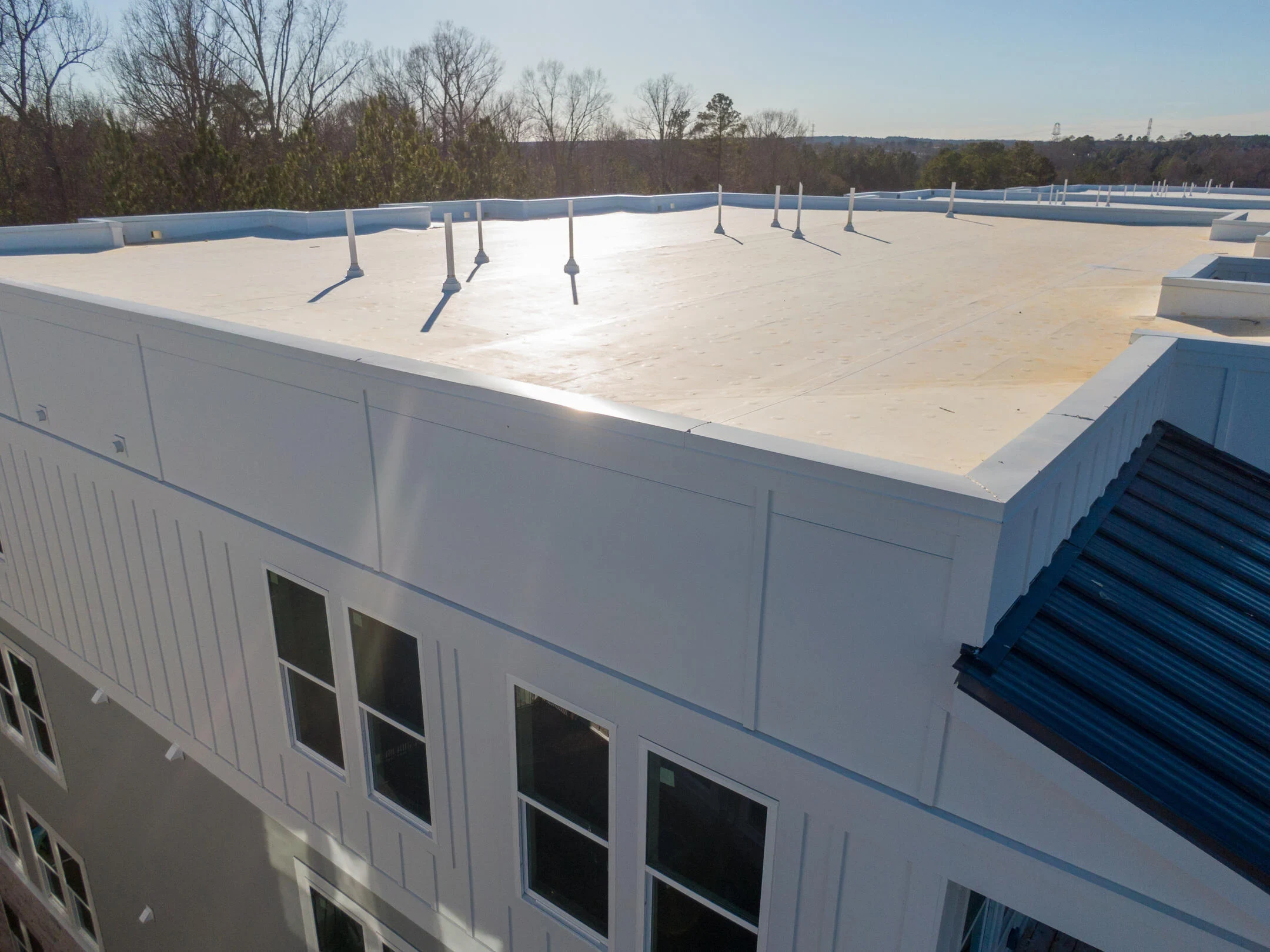
White EPDM shows up most often on our estimates for school districts, clinics, and municipal buildings across the Fox Cities, where energy cost and rooftop unit load matter as much as the roof itself. It is the same vulcanized rubber as black EPDM with a reflective surface layer, and that surface changes how the roof behaves through both a Wisconsin summer and winter.
Why Institutional Buildings Lean Toward the Reflective Sheet
K-12 buildings across the district, along with medical office buildings near Fox Valley healthcare campuses, tend to run rooftop units hard through humid Fox Valley summers, and a reflective membrane keeps the roof surface temperature meaningfully lower than a dark membrane under direct sun. That lower surface temperature reduces the heat load the rooftop units have to fight, which matters on buildings where the mechanical budget gets scrutinized line by line.
Public and institutional owners also tend to hold buildings longer than a typical private commercial owner, which shifts the roofing decision toward lifecycle energy performance rather than the lowest install-day number. White EPDM fits that ownership pattern well.
Reflectivity and Rooftop Cooling Load in Fox Valley Summers
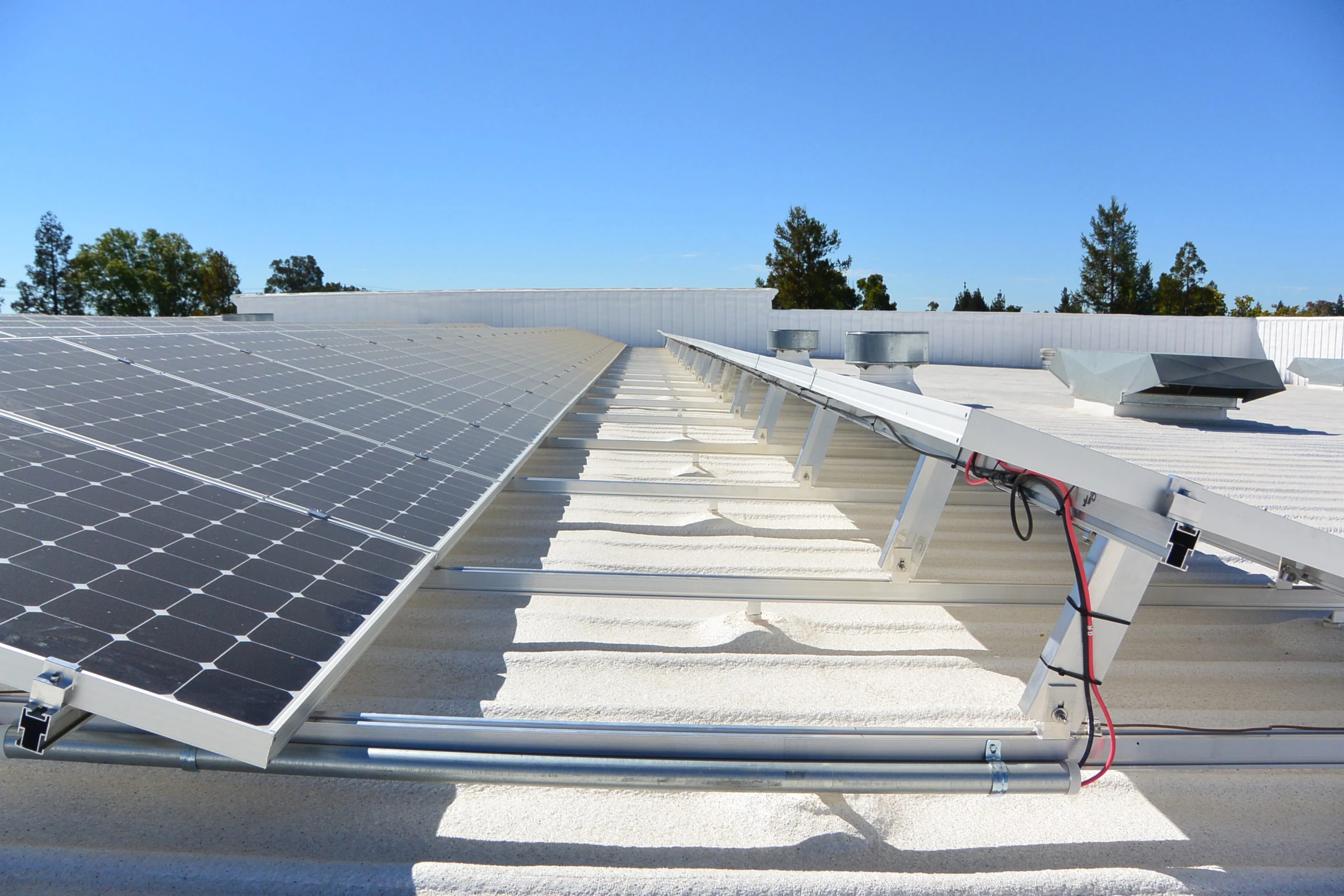
Humidity off the Fox River and Lake Winnebago pushes summer cooling loads higher than a strictly dry-climate comparison would suggest, and rooftop units already working against that humidity benefit from a roof surface that is not adding radiant heat on top of it. White EPDM's reflective surface knocks meaningful degrees off membrane surface temperature compared to black membrane under the same sun exposure, which translates into a cooler attic or plenum space depending on the building's insulation and ventilation design.
That reflectivity comes with a maintenance note: the white surface shows dirt and biological growth more visibly than black membrane, and periodic cleaning matters more for owners who want the reflective performance to hold up rather than gradually gray out under Fox Valley pollen and mildew cycles.
Seam Tape Chemistry and Long-Term Weathering
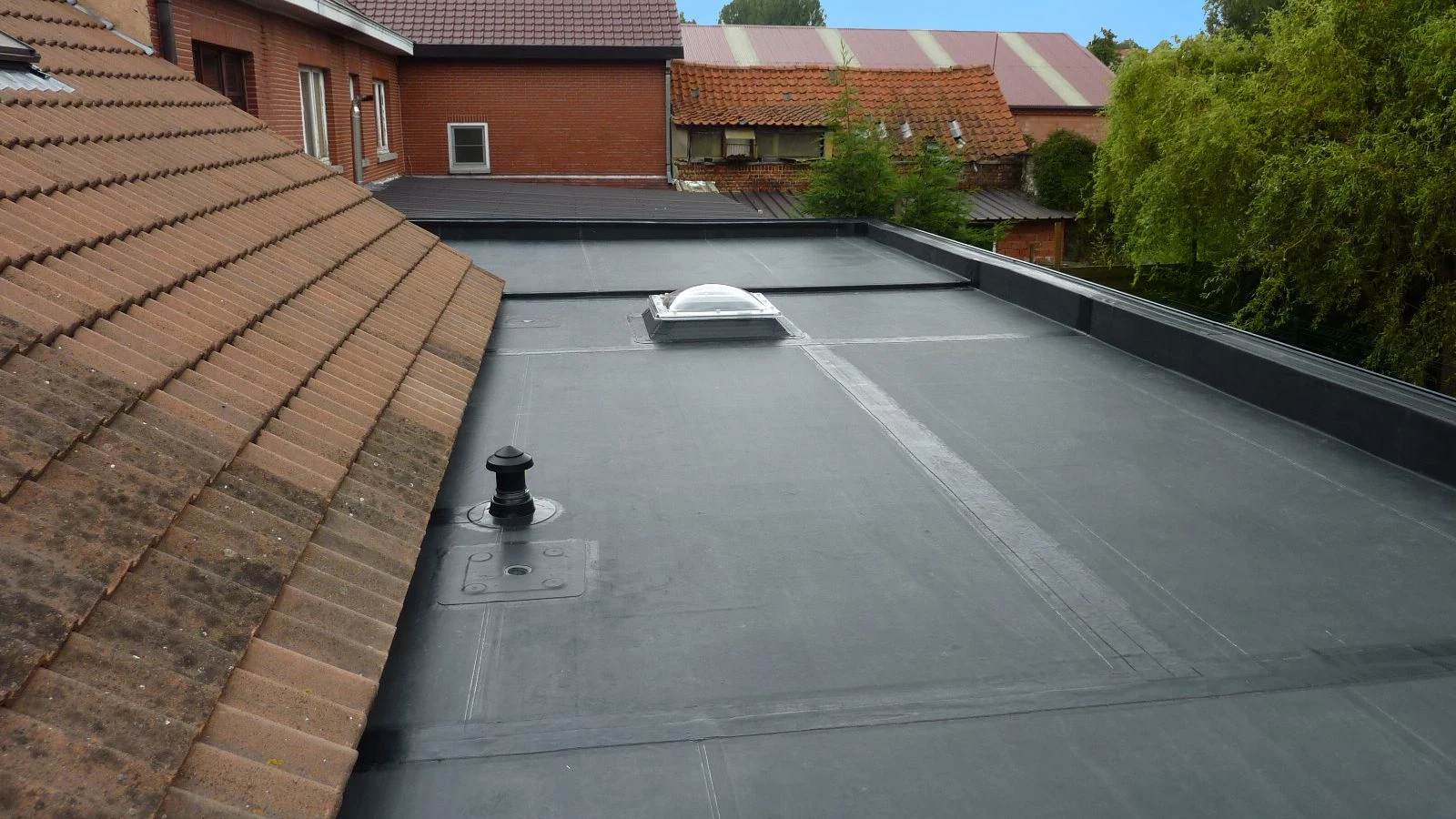
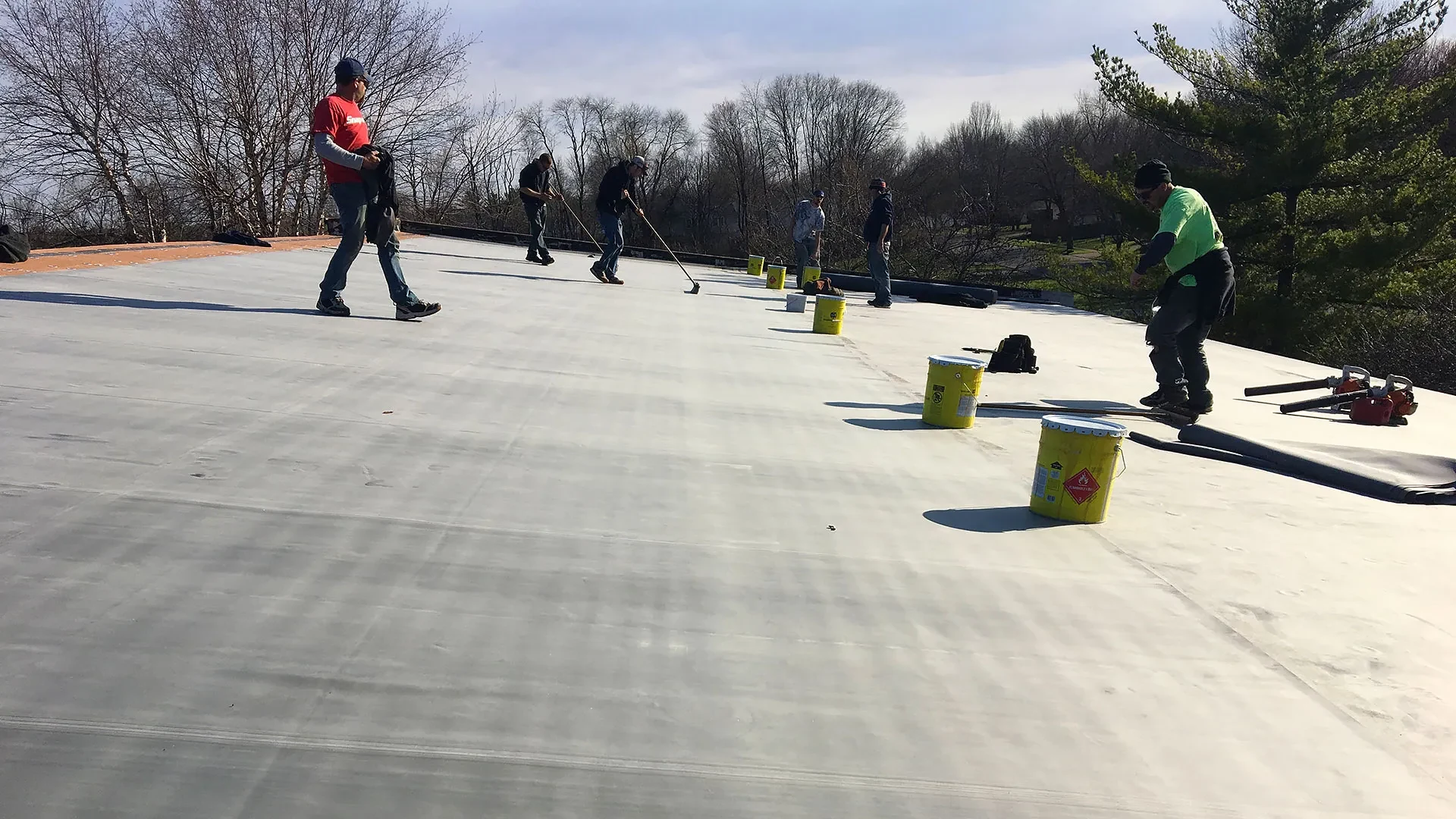
White EPDM uses the same taped-seam method as black EPDM, bonding overlapping sheet edges with EPDM-specific seam tape rather than a hot-air weld. The tape's adhesive chemistry is the long-term weak point on any EPDM roof, and we watch it closely on institutional buildings because these roofs often go years between capital-project attention once installed.
We recommend a seam inspection on a set schedule for school and municipal roofs specifically because these buildings do not always have a facilities team walking the roof between projects the way an owner-occupied manufacturing plant might. Catching tape lift or adhesive fatigue during a scheduled walk avoids a leak showing up in a classroom ceiling mid-winter.
Sheet Size as an Installation Advantage on Large, Simple Roofs
EPDM comes in wide sheet widths that reduce the total linear footage of seams on a large, simple roof plate, which is an advantage on the kind of single-story school buildings common across Appleton and Neenah school districts. Fewer seams means fewer long-term maintenance points, which matters for institutional owners planning a roof to last decades between major capital projects.
- K-12 school buildings with large, simple low-slope roof plates
- Medical office buildings prioritizing rooftop unit cooling efficiency
- Municipal buildings on long capital-replacement cycles
- Multi-tenant office roofs where the owner covers utility costs directly
- Re-covers over buildings with reasonable roof geometry and moderate penetration counts
Cold-Weather Considerations Specific to the White Sheet
White EPDM's reflective surface means it runs cooler in winter sun than black membrane would, which is generally a non-issue for the membrane itself but does mean less passive melt assistance at snow-covered areas compared to a dark roof. On school buildings with rooftop mechanical units that need clear access during winter service calls, that difference occasionally factors into snow-removal planning around unit platforms.
Seam installation during cold-weather work follows the same adhesive-cure temperature requirements as black EPDM. We schedule tape-seam work around daytime temperature windows and avoid installing seams when the substrate itself is too cold for the adhesive to bond properly.
Questions Fox Valley Facilities Managers Ask About White EPDM
Does white EPDM actually reduce cooling costs?
The reflective surface lowers membrane and plenum temperature compared to black membrane, which reduces the load on rooftop units. The actual cost impact depends on the building's insulation, ventilation, and unit efficiency.
How often should seam tape be inspected on a school roof?
We recommend a scheduled walk rather than waiting for a visible leak, since institutional buildings often go long stretches without routine roof attention between capital projects.
Does white EPDM get dirty faster than black EPDM?
Dirt and biological growth show more visibly on the white surface. Periodic cleaning helps maintain the reflective performance over the membrane's service life.
Can white EPDM be installed in Wisconsin's cold months?
Yes, within the adhesive's cure temperature window. We schedule taped-seam work around daytime temperatures rather than working through a cold snap.
Is white EPDM more expensive than black EPDM?
There is typically a modest premium for the reflective sheet. Whether it pays back depends on the building's cooling load and how long the owner plans to hold the property.
Related
Ready to review the roof scope?
Request a Roof AssessmentWhite EPDM Assembly and Repair Compatibility
White EPDM combines rubber-membrane behavior with a lighter surface, but it still depends on compatible primers, tapes, adhesives, and flashing accessories throughout the assembly. We verify the existing roof type before a repair or tie-in so a visually similar surface does not lead to an incompatible detail. The scope separates field membrane, perimeter attachment, penetrations, drains, curbs, expansion joints, and traffic protection. It also records substrate and insulation conditions that may prevent a recover even when the exposed membrane looks suitable. On Appleton roofs that remain in service during work, daily dry-in and material storage are planned around weather and facility access. Closeout notes identify approved repair materials and locations so later maintenance does not mix chemistries or obscure the original assembly.