
Food Processing Facility Roofing in Appleton, WI
Roofing designed around Grease, Refrigeration, and Washdown at Food Plants
Cheese plants, pet-food manufacturing, and packaged-food operations run differently than a dry warehouse, and their roofs take a different kind of abuse. Rooftop exhaust carries grease and moisture, refrigeration systems bring ammonia into the equation, and sanitation standards leave no room for standing water near intake vents. We spec these roofs around what the plant actually produces.
Grease and Process Exhaust on Cheese and Pet-Food Plant Roofs
Processing lines that cook, render, or dry product push exhaust straight onto the roof through rooftop fans, and that exhaust carries fine grease and oil particulate with it. Left alone, that residue softens some membrane surfaces over time and makes seams harder to keep sealed near exhaust discharge points. We treat the zone downwind of every process exhaust fan as a separate detailing problem, not simply another patch of field membrane.
PVC and modified bitumen with grease-resistant surfacing both perform better than standard TPO in these zones. Where budget allows only one membrane across the whole roof, we still upgrade flashing and walkway protection immediately around exhaust discharge, since that's where failures start first.
Ammonia Refrigeration and Fastener Corrosion
Cheese and pet-food plants around Chilton and Little Chute commonly run ammonia-based refrigeration for cold storage, and rooftop condenser units tied to that system can leak trace ammonia vapor near their curbs. Standard galvanized fasteners corrode faster under that exposure than most facility managers expect. We spec stainless or heavier-coated fasteners in a perimeter zone around ammonia equipment rather than running standard hardware across the whole field and hoping it holds.
Rooftop refrigeration equipment also tends to be heavier and more permanent than a standard RTU, with dedicated structural curbs and sometimes secondary containment pans. We coordinate flashing height and curb detailing with the mechanical contractor before membrane goes down, since retrofitting flashing around an installed condenser unit is slower and more expensive than planning for it first.
Insulation Strategy for Freezer and Cooler Roof Zones
A roof over a freezer or cooler section behaves differently than the roof over ambient production space. The temperature differential across the assembly is larger, which raises condensation risk at the interior deck surface if vapor control isn't handled correctly, and it changes how we think about R-value across the building rather than treating the whole roof as one thermal zone.
We map insulation thickness and vapor retarder placement to each interior zone below, thickening insulation and tightening vapor control over freezer space while keeping standard specification over ambient production and office areas. Thermal bridging at parapets adjacent to freezer rooms gets extra attention, since that's a common spot for interior condensation to show up as a ceiling problem that actually starts at the roof edge.
Sanitation-Driven Drainage and Roof Detailing
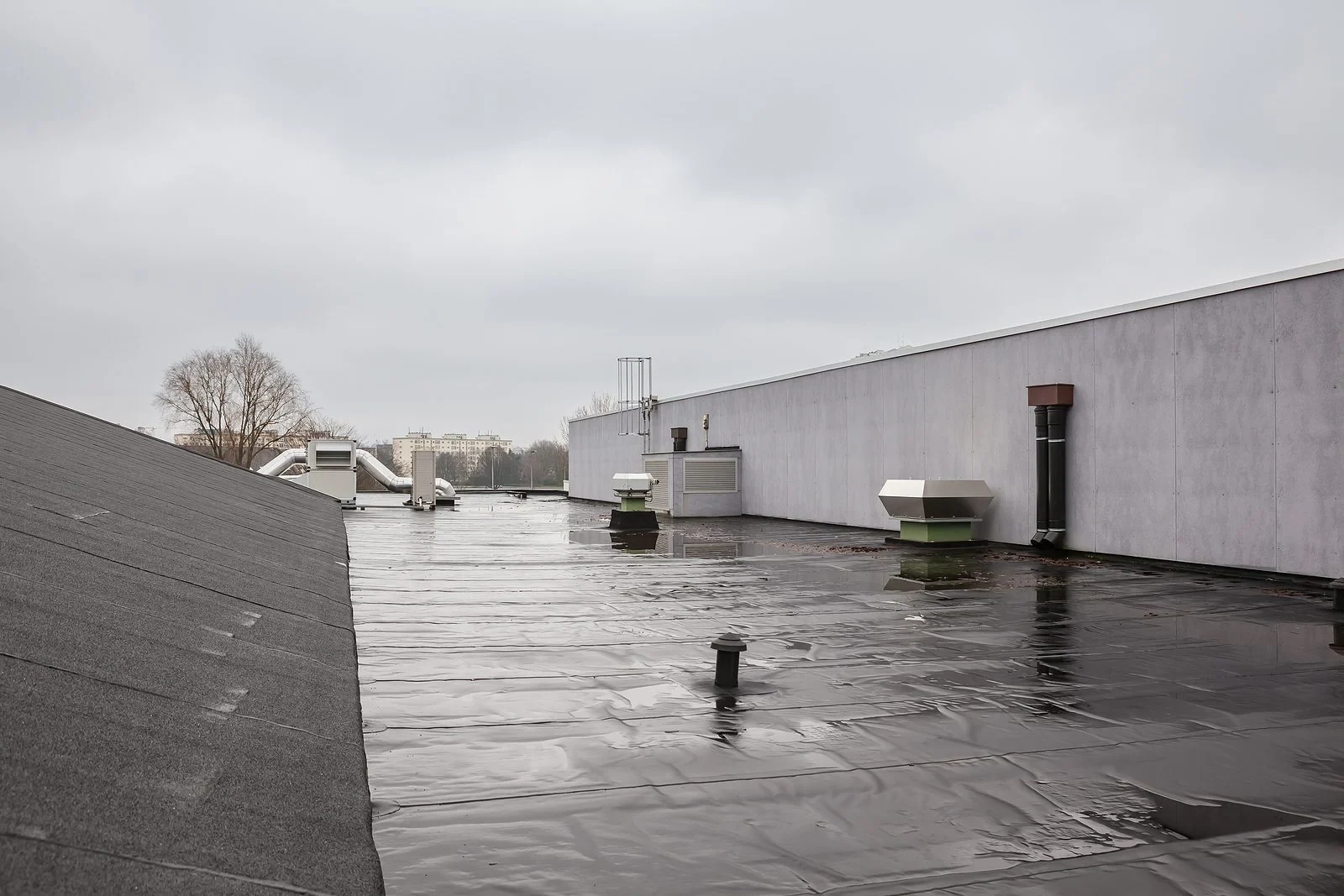
Food plants can't tolerate standing water near intake louvers or exhaust fans the way a dry warehouse might tolerate a shallow ponding area. Pooled water near an air intake is a pest and contamination risk that sanitation audits flag quickly. We design positive drainage with tapered insulation toward drains sized for the roof's actual area, not the undersized drains original construction sometimes leaves behind.
Roof accessories on a food plant roof usually include:
- Rooftop exhaust fans and hoods over cooking or rendering lines
- Ammonia or Freon condenser units on structural curbs
- Air intake louvers requiring clear, dry rooftop zones nearby
- Interior floor drains tied to roof drain leaders through the building
- Catwalks for sanitation and maintenance crew access
- Insect light traps mounted near rooftop access doors
Working Around Production Schedules and Sanitation Windows
Food plants often run close to continuous shifts, and sanitation protocols restrict when contractors can be on or near the roof without triggering additional cleaning procedures below. We plan roof access points and staging areas with plant management before work starts, keeping equipment and material staging away from active intake zones and coordinating loud work like fastener installation around sensitive production windows where possible.
Smaller processors around New London and Seymour often run leaner maintenance staff than the larger cheese and pet-food operations, so we build maintenance schedules that fit what an in-house team can realistically keep up with between our visits, rather than handing over a plan that assumes a dedicated facilities department.
Food Plant Roofing Questions We Get in the Fox Valley
Does rooftop grease exhaust actually damage the membrane?
Over time, yes, particularly on standard TPO near discharge points. We upgrade membrane or add protective detailing in that specific zone rather than paying for grease-resistant material across an entire roof that doesn't need it everywhere.
Why do fasteners near refrigeration equipment corrode faster?
Trace ammonia vapor from refrigeration systems accelerates corrosion on standard galvanized hardware. We spec corrosion-resistant fasteners in that perimeter zone specifically.
Can you work without disrupting sanitation certifications?
We coordinate staging, access, and timing with plant management so work doesn't create contamination risk near production or storage areas, and we keep debris and materials away from air intakes throughout the project.
How is a freezer-zone roof different from the rest of the building?
The temperature swing across that section of roof is larger, so vapor control and insulation thickness get calculated separately for that zone instead of applying one spec across the whole roof.
What causes ponding near exhaust fans on food plant roofs?
Usually undersized or poorly placed drains from original construction. We correct slope with tapered insulation and add drainage capacity sized to the roof's real square footage.